
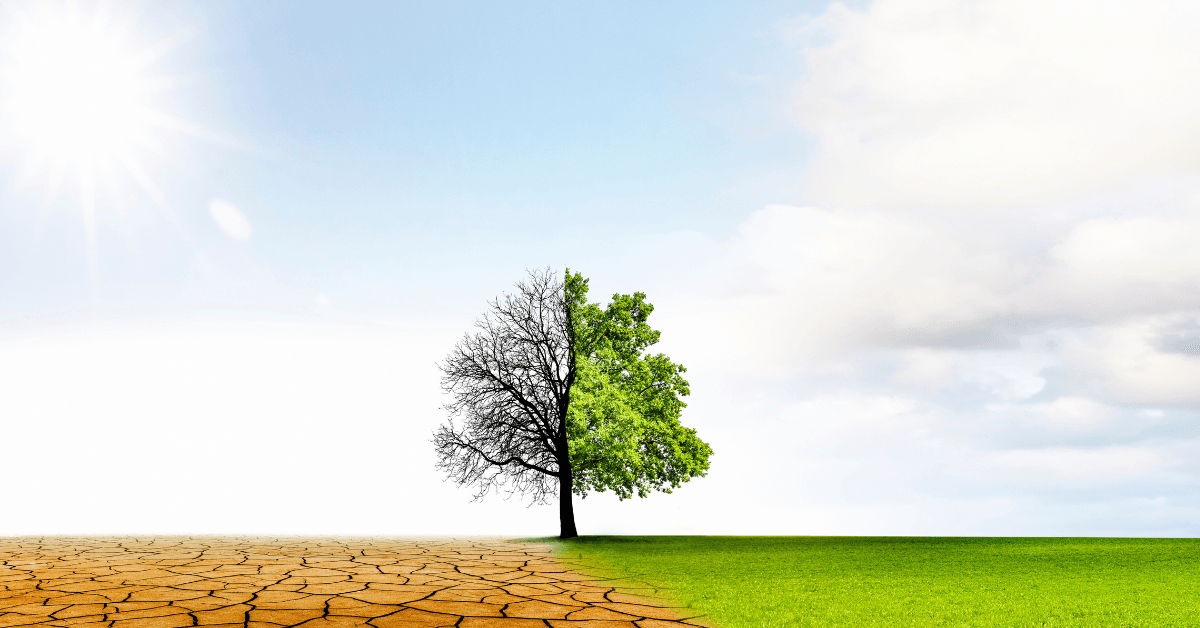
Soil degradation and rising salinity
Soil degradation and rising salinity are among the most pressing environmental threats to global agriculture, biodiversity, and water security. As soil health deteriorates, food production suffers, ecosystems become imbalanced, and water resources dwindle. These issues are advancing at an alarming rate, turning millions of hectares of fertile land into barren wastelands each year. Farmers, landscapers, and environmentalists face increasing challenges in restoring soil health and maintaining sustainable land use.
According to the Food and Agriculture Organization (FAO), more than 33% of the world's land is moderately to highly degraded, and if no action is taken, this figure will continue to rise.
What is causing soil degradation and rising salinity?
Several factors contribute to soil degradation and rising salinity, most of which stem from unsustainable land use practices and environmental changes:
Overuse of chemical fertilizers
Chemical reliance depletes soil structure, reducing its ability to retain nutrients and water. Over time, this weakens plant roots and accelerates erosion.
Inefficient irrigation
Poor water management, including over-irrigation and inadequate drainage, leads to salt buildup in the soil. As water evaporates, salts concentrate in the topsoil layer, making it unsuitable for plant growth.
Climate change
Rising temperatures and erratic rainfall patterns intensify soil degradation. Prolonged droughts and floods cause soil erosion, deplete organic matter, and disrupt the delicate balance needed for plant life.
Deforestation and monoculture farming
The removal of natural vegetation and continuous planting of the same crop strain strip soil of essential nutrients and disrupt natural regeneration cycles. Without crop rotation or biodiversity, soil loses its resilience.
The consequences of soil degradation
Soil degradation is not just a problem for farmers—it affects the entire planet:
- Reduced crop yields - Declining soil fertility leads to lower agricultural productivity, threatening global food security.
- Water scarcity - Degraded soil cannot retain water efficiently, causing droughts and reducing freshwater availability.
- Increased erosion - Weak soil structure makes land more vulnerable to wind and water erosion.
- Loss of biodiversity - Healthy soil supports diverse microbial life, but degradation destroys ecosystems.
- Economic losses - Farmers face higher costs for fertilizers and water while producing lower yields.
How to prevent and reverse soil degradation
The good news is that soil degradation and rising salinity can be prevented and even reversed with the right strategies:
1. Adopt sustainable farming practices
- Use crop rotation to maintain soil fertility
- Implement cover cropping to prevent erosion
- Reduce chemical fertilizer dependency
2. Improve irrigation and drainage systems
- Use drip irrigation to minimize water waste
- Ensure proper drainage to prevent salt accumulation
3. Use soil conditioners like Ground Improver®
Ground Improver® is a powerful solution for restoring degraded and saline-affected soil. It works by:
- Reducing salinity levels – Helps flush out excess salts from the soil
- Improving water retention – Enhances soil's ability to hold moisture
- Boosting nutrient absorption – Strengthens plant roots and increases productivity
Learn more about how Ground Improver® remediates salinity and restores soil health.
Conclusion: Protect our soil, protect our future
Soil degradation and rising salinity are not inevitable. By adopting sustainable farming practices, improving water management, and using innovative solutions like Ground Improver®, we can restore soil health and ensure a sustainable future for agriculture and the environment.
Take action today to protect the soil that feeds the world.